The Roman Catholic Church Rose From The Ruins Of Pagan Rome As Constantine’s Empire Turned Christianity Into A State-Favored Religious Institution
The origins of the Roman Catholic Church are not found in Peter preaching at Pentecost, Paul writing to the churches, or the apostles planting local assemblies under the authority of Jesus Christ. The New Testament church began in the first century as a spiritual body of born-again believers saved by grace through faith. The Roman Catholic system, as a centralized, hierarchical, sacramental, state-favored religious institution, began taking recognizable shape in the 4th century, when professing Christianity was forcibly joined to the power structure of the Roman Empire in what can only be described as a hostile corporate takeover. Cue the woman riding on the Beast.
“And I saw the woman drunken with the blood of the saints, and with the blood of the martyrs of Jesus: and when I saw her, I wondered with great admiration.” Revelation 17:6 (KJB)
The Bible knows nothing of a pope ruling from Rome, a priesthood offering a repeated sacrifice of the mass, Mary as mediatrix, purgatory, relic veneration, indulgences, cardinals, monasteries, confessionals, or a Vatican state. Those are not apostolic doctrines. They are later historical developments, many of them growing out of the centuries after Constantine. The church that Christ purchased with His blood was not a Roman corporation. It was, and remains, a spiritual body.
“Take heed therefore unto yourselves, and to all the flock, over the which the Holy Ghost hath made you overseers, to feed the church of God, which he hath purchased with his own blood.” Acts 20:28 (KJB)
Constantine Did Not Start Christianity, He Politicized It
The decisive historical shift came under Constantine. In A.D. 313, Constantine and Licinius issued what is commonly called the Edict of Milan, granting legal toleration to Christianity and restoring confiscated Christian property. Britannica describes it as the proclamation that “permanently established religious toleration for Christianity within the Roman Empire.” That was the beginning of the Constantinian shift: Christianity moved from persecuted faith to protected religion. But what looked like relief from persecution also opened the door to corruption by imperial power. Before Constantine, Christians were often hunted by Rome. After Constantine, bishops began receiving imperial favor, church disputes became matters of state interest, and the machinery of Caesar began wrapping itself around professing Christianity. That is not the pattern of the New Testament.
“Jesus answered, My kingdom is not of this world: if my kingdom were of this world, then would my servants fight,” John 18:36 (KJB)
The Lord Jesus Christ did not commission His apostles to build a religious empire. He sent them to preach the gospel for the salvation of individual souls for the body of Christ.
Nicaea Shows The New Imperial Church Order
In 325 AD, Constantine called the Council of Nicaea to address the Arian controversy over the deity of Christ. The deity of Christ is absolutely Bible truth, and Arius was wrong. But the historical issue is not merely what doctrine was debated; it is who summoned the council and what that revealed. Even the Catholic Encyclopedia, preserved at New Advent, says the emperor “begged the bishops of every country to come promptly to Nicaea,” provided imperial transport, and supplied their maintenance during the council. It also admits that it is “not historically known” whether Constantine convoked the council solely in his own name or in agreement with Pope Sylvester.
That is a staggering admission. Why? Because that means that the first great council of the emerging imperial church order was not called by an apostle, not called by Scripture, not called by a New Testament pattern of local church authority, and certainly not by Jesus hand-picked leader Paul, but by a Roman emperor. The problem is not that Nicaea affirmed the deity of Christ. The problem is that this moment reveals a new arrangement: the emperor and the bishops now standing together in a system of church-state power. The apostolic churches had pastors, elders, and bishops. They did not have Caesar organizing their doctrine and funding their councils.
“The elders which are among you I exhort, who am also an elder,” 1 Peter 5:1 (KJB)
Peter did not call himself pope. He called himself “an elder.”
Theodosius Completed What Constantine Began
Constantine legalized and favored Christianity to enhance and increase his political power and control. Later, Theodosius I pushed Nicene Christianity into the position of imperial orthodoxy. Britannica notes that Theodosius “established the creed of the Council of Nicaea (325) as the universal norm for Christian orthodoxy” and convened the Council of Constantinople in 381. This is where the matter becomes even more plain. By the late 4th century, the Roman Empire was no longer merely tolerating Christianity. It was enforcing a particular form of Christianity as the approved religion of the empire.
That is the soil from which Roman Catholicism grew. not the upper room, but the imperial court; not apostolic simplicity, but Roman organization; not spiritual separation, but church-state union.
The Bible warned against exactly this type of mixture:
“Be ye not unequally yoked together with unbelievers: for what fellowship hath righteousness with unrighteousness?” 2 Corinthians 6:14 (KJB)
The Church At Rome Was Not The Roman Catholic Church
Paul wrote to believers at Rome in the first century, but Romans is not a Catholic epistle. There is no pope in Romans. No mass. No Marian dogma. No priestly confessional. No Vatican treasury. No sacramental system. Paul addressed saved people in a local assembly.
“To all that be in Rome, beloved of God, called to be saints:” Romans 1:7 (KJB)
Notice what he does not say: “To the pope at Rome.” He does not address Peter as bishop of Rome. He gives no instruction to submit to Roman supremacy. He teaches the same gospel he preached everywhere else: justification by faith, grace, the blood of Christ, and the righteousness of God apart from the works of the law.
“Therefore being justified by faith, we have peace with God through our Lord Jesus Christ:” Romans 5:1 (KJB)
The later Roman Catholic claim that the church of Rome is the mother and mistress of all churches cannot be read out of the New Testament. It must be read back into it from later ecclesiastical tradition, which is exactly what they did.
The Bishop Of Rome Rose By Prestige, Politics, And Power
The bishop of Rome did not appear in the first century as a universal pope. His authority grew gradually because Rome was the imperial capital, wealthy, influential, and associated by tradition with Peter and Paul. Over time, the Roman bishop increasingly claimed special authority over other churches. But that development was historical and political, not biblical and apostolic. In the New Testament, church government is local. Bishops and elders oversee flocks. No single bishop rules the entire body of Christ from one city.
Paul told Titus:
“For this cause left I thee in Crete, that thou shouldest set in order the things that are wanting, and ordain elders in every city,” Titus 1:5 (KJB)
That is the Bible pattern: elders in every city, not a pope over every church.
Pagan Rome Did Not Die, It Put On A Religious Robe
The Roman Catholic system absorbed much of the machinery, imagery, and religious instinct of pagan Rome. As the empire became “Christianized,” the old Roman appetite for temples, ceremonies, sacred offices, relics, holy days, and priestly mediation was repackaged under Christian vocabulary.
This is one of the most important points: Roman Catholicism did not simply absorb New Testament Christianity. It institutionalized, ritualized, and Romanized it. The result was a religious system with Christian terms but Roman architecture; biblical names but pagan habits; apostolic language but imperial structure. The New Testament believer is not saved through a church hierarchy. He is saved by the finished work of Jesus Christ.
“For by grace are ye saved through faith; and that not of yourselves: it is the gift of God: Not of works, lest any man should boast.” Ephesians 2:8,9 (KJB)
That one verse destroys Rome’s sacramental system. A number of years ago, Pope Francis dispatched Anglican bishop Tony Palmer to start spreading the message that Rome now believed in salvation by grace through faith, but it was a ‘failed from the start’ effort that rang hollow everytime it was sounded.
The Real Issue Is Authority
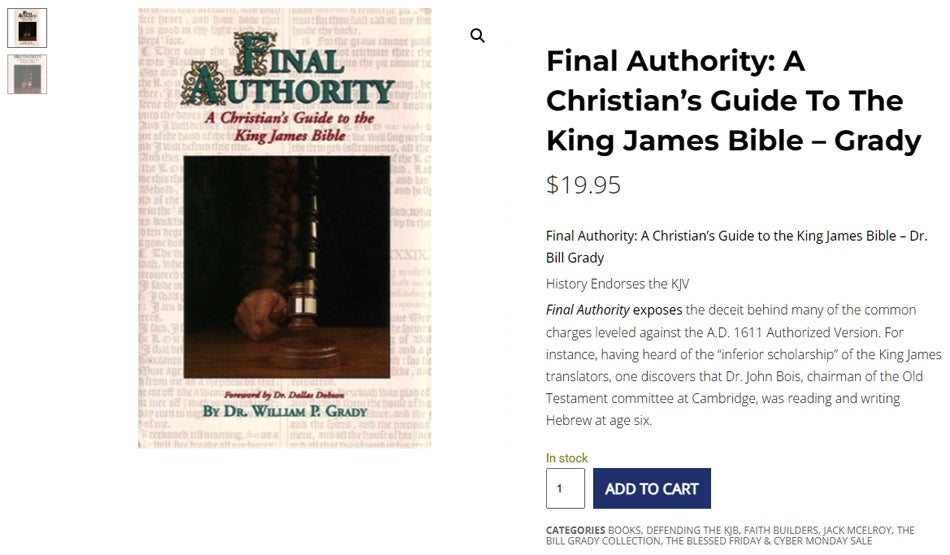
At the heart of the Roman Catholic question is not merely history. It is authority. Rome says authority is Scripture plus tradition, interpreted by the magisterium under papal authority. The Bible believer says final authority is the word of God. Anything else that is more or less is not of God.
“All scripture is given by inspiration of God, and is profitable for doctrine, for reproof, for correction, for instruction in righteousness:” 2 Timothy 3:16 (KJB)
The Roman Catholic system must lean on tradition because its defining doctrines cannot possibly be established from the New Testament. The papacy, the mass as a sacrifice, Marian dogmas, purgatory, indulgences, priestly absolution, and the treasury of merit are not apostolic Christianity. They are later man-made additions.
The Bible warns against religious tradition replacing the commandment of God:
“Making the word of God of none effect through your tradition,” Mark 7:13 (KJB)
The Commentary Bottom Line
The Roman Catholic Church did not begin as the church Christ founded. It arose as a historical development after the apostles, especially in the 4th century, when Christianity was legalized, favored, organized, and eventually enforced by Roman imperial power. Constantine opened the door in 313 AD. Nicaea in 325 AD displayed the new imperial-bishop alliance. Theodosius advanced Nicene Christianity as the empire’s religious norm by the end of the 4th century. From that soil grew the Roman Catholic institution: hierarchical, sacramental, political, and centered increasingly on the authority of Rome.
The first-century church was a body of believers gathered around the apostle Paul and his gospel. The Roman Catholic Church became a religious empire gathered around Rome and its hierarchy. That’s the dividing line.
- One is spiritual. The other is institutional.
- One is built on the finished work of Christ. The other developed a priestly system of mediation.
- One preaches salvation by grace through faith. The other binds men to sacraments, tradition, and ecclesiastical authority.
The Bible believing conclusion is plain: the Roman Catholic Church is not the mother of biblical Christianity. It is the Roman corruption and counterfeit of it. At the Council of Trent in 1545, the Roman Catholic Church offficially declared their opposition to Paul’s gospel, and that’s where things have remained ever since.
Now The End Begins is your front line defense against the rising tide of darkness in the last Days before the Rapture of the Church
- HOW TO DONATE: Click here to view our WayGiver Funding page
When you contribute to this fundraising effort, you are helping us to do what the Lord called us to do. The money you send in goes primarily to the overall daily operations of this site. When people ask for Bibles, we send them out at no charge. When people write in and say how much they would like gospel tracts but cannot afford them, we send them a box at no cost to them for either the tracts or the shipping, no matter where they are in the world. We have a Gospel Billboard program. We are now broadcasting Bible studies, Podcasts and a Sunday Service 5 times a week, thanks to your generous donations. All this is possible because YOU pray for us, YOU support us, and YOU give so we can continue growing.
But whatever you do, don’t do nothing. Time is short and we need your help right now. The Lord has given us an open door with a tremendous ‘course’ for us to fulfill that will create an excellent experience at the Judgement Seat of Christ. Please pray for our efforts, and if the Lord leads you to donate, be as generous as possible. The war is REAL, the battle HOT and the time is SHORT…TO THE FIGHT!!!
“Looking for that blessed hope, and the glorious appearing of the great God and our Saviour Jesus Christ;” Titus 2:13 (KJB)
“Thank you very much!” – Geoffrey, editor-in-chief, NTEB
The post How Constantine’s 4th-Century Religious Revolution Turned Persecuted Christianity Into The State-Backed Roman System That Became The Catholic Church appeared first on Now The End Begins.